

Blog
Hiring Your First Employee in the UK: What Small Businesses Need to Know
Hiring your first employee is a major step in the growth of your business, and a big responsibility. Whether you're a startup or a growing SME, getting the process right from the beginning can save you time, money, and stress down the line. At Home of HR, we provide expert HR support for small businesses to ensure every hire is compliant and set up for success. Here’s what you’ll need to know:
Define the Role Clearly
Before advertising the position, take the time to define exactly what the role involves. This ensures you attract the right candidates and are clear about expectations.
Ask yourself:
What tasks will they be responsible for?
What skills and qualifications are essential?
Is the role full-time, part-time, or temporary?
Will they work remotely, on-site, or hybrid?
A detailed job description forms the foundation of a fair and effective recruitment process.
Register as an Employer with HMRC
To legally employ someone, you must register with HMRC and operate a PAYE (Pay As You Earn) system.
Checklist:
Register as an employer with HMRC (at least 4 weeks before the first payday)
Set up payroll software or choose a provider
Understand your responsibilities for tax and National Insurance
Many small business owners choose to outsource payroll to avoid costly mistakes—and we can help with that.
Complete Right to Work Checks
All UK employers are legally required to confirm a new hire’s right to work in the UK.
You’ll need to:
Check original documents (e.g. passport, visa, settled status proof)
Use the government’s online checking service if applicable
Keep a dated copy of the documents securely
Failing to complete these checks correctly can result in fines, even if the employee has the right to work.
Issue a Written Statement of Employment
Your new employee must receive a written statement of employment particulars by their first working day. This is the legal minimum and usually forms part of their contract.
It should include:
Job title and start date
Salary and payment frequency
Hours of work and holiday entitlement
Notice period
Workplace location
Home of HR can create custom employment contracts and onboarding packs tailored to your business.
Understand Your Legal Responsibilities
Employing staff means complying with a wide range of UK employment laws. Getting this right protects both your employee and your business.
Key employer responsibilities include:
Paying at least the National Minimum or Living Wage
Complying with Working Time Regulations (maximum hours, rest breaks, etc.)
Providing statutory holiday entitlement (at least 28 days including bank holidays for full-time staff)
Avoiding discrimination in recruitment and employment practices
Maintaining health and safety standards
Set Up a Workplace Pension
Under auto-enrolment rules, you must enrol eligible employees into a workplace pension and contribute to it.
What you need to do:
Choose a pension provider (e.g. NEST or The People’s Pension)
Enrol all eligible staff
Make employer contributions (minimum 3% of qualifying earnings)
Communicate the scheme details to your employee
This applies even if you’re only hiring one person.
Arrange Employer’s Liability Insurance
You are legally required to have Employer’s Liability Insurance in place from the day your employee starts work.
Legal requirement:
Must be at least £5 million in cover
Must come from an authorised insurer
Fines of up to £2,500 per day apply if you don’t have it
Create Workplace Policies and a Basic Employee Handbook
Even with a small team, having clear workplace policies protects your business and helps manage employee expectations.
Consider including policies on:
Sickness and absence reporting
Disciplinary and grievance procedures
Health and safety
Data protection and confidentiality
Remote or hybrid working (if relevant)
Our HR consultancy for SMEs offers affordable policy and handbook creation services designed for small teams.
Onboard Your Employee Properly
A smooth onboarding process sets the tone for a great working relationship and improves retention.
Successful onboarding includes:
Introducing them to your business, team, and values
Providing any necessary training or equipment
Clarifying key expectations for the first few weeks
Setting goals and check-ins to monitor progress
Final Thoughts
Hiring your first employee is an exciting milestone and with the right support, it doesn’t have to be stressful. By following these steps and staying legally compliant, you’ll set your business up for long-term success and create a great foundation for your team to grow.
At Home of HR, we can help with recruitment, staying compliant, formal meeting support, or just some adhoc HR advice - we’re here to help. Get in touch to find out what packages we have to support you and your business with this.
Are You Ready for 2026? Essential Employment Law Updates for Employers
As 2026 approaches, several key changes to UK employment law are on the horizon. Employers must prepare now to stay compliant and ahead of the curve. Here at Home of HR, we help businesses navigate legislation with confidence, so here’s what’s coming and what you can do now.
1. Flexible working becomes the norm
Flexible working rights are expanding. From 2026, we may see:
A default right to request flexible working from day one
Shorter response times (2 months)
Potential for multiple requests per year
Action: Review your policies and train line managers on how to manage requests fairly.
2. New rules around AI and automation
With AI increasingly used in hiring and performance management, regulations are expected to introduce:
Transparency requirements when AI is used
Human oversight for key decisions
Fairness and bias checks
Action: Audit any automated processes and ensure transparency with candidates and staff.
3. Stronger protections for pregnant employees and new parents
Redundancy protections are likely to extend to 18 months after birth or adoption.
Action: Review your redundancy procedures and ensure returners from parental leave are treated fairly.
4. Carer’s leave could become paid
Currently unpaid, carer’s leave may become paid in 2026.
Action: Monitor changes and support working carers through flexible options and internal policies.
5. Workplace harassment prevention duties
The new legal duty to prevent sexual harassment at work will be enforced in 2026.
Action: Train staff, refresh your policies, and ensure there are clear reporting routes in place.
Get ahead with Home of HR!
These changes are about more than compliance - they’re about building fairer, more future-focused workplaces. If you need help preparing your business for these changes, we’re here to support you with policy reviews, training, and on-call HR advice.
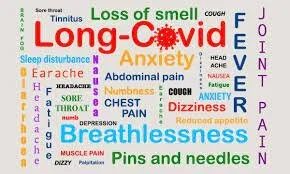
Long Covid - What is it and what does it mean for you as an employer?
COVID-19 can cause symptoms for some people that can last weeks or months after the injection has gone. This is now widely known as long COVID and according to a ACAS, it is having an impact on businesses as affected workers try to get back to work.
The Office for National Statistics has estimated that over 1 million people have reported experiencing long COVID and an advice note has therefore been issued following the staggering statistics.
This highlights that the symptoms are many and varied and include: extreme tightness, shortness of breath, chest pain or tightness, problems with memory and concentration (brain fog), difficulty sleeping, heart palpitations, dizziness, pins and needles and joint pain.
Other patients have reported depression and anxiety, tinnitus, earaches, feeling sick, diarrhoea stomach aches, loss of appetite, or high temperature, headaches, sore throat, changes to sense of smell or taste and rashes.
ACAS Chief Executive, Susan Clews said: “long COVID is a relatively new illness and for some people, it can be debilitating. For others its effects are variable, and a worker could be fine one day, but need to be off work if their symptoms worsen. We have been contacted by workers suffering from symptoms who are unsure of their rights and from employers who want advice on how to best support their staff”.
The advice note offers practical tips for employers to manage the various effects of the condition in a sensitive way, as well as a range of options that can help staff get back to work safely.
It suggests that employers should:
· arrange and offer occupational health assessments,
· Look into reasonable adjustments, which can vary from changed hours to adapted physical workspaces; and
· discuss flexible working as an option, as well as phased returns which may mean coming back part time initially to build back up to working usual hours.
It's a good idea for the employer to focus on the reasonable adjustments they can make ACAS said, rather than trying to work out if an employee's condition is a disability.
It's really important to understand from the employees perspective, how they're feeling, and if the symptoms are potentially that of long COVID. If you're unsure what this means and you need further advice, get in touch with us using the “Get in Touch” button on the website, or drop us an email at alice@homeofhr.co.uk
Further information can also be found on the ACAS website and search for “long COVID”.
The Job Retention Scheme is back!!
What is the Job Retention Scheme?
So the Job Retention Scheme (JRS) has been extended until 31st March 2021 in light of recent events in the UK and the Government confirming a second national lockdown until 2nd December 2020.
This therefore means that the Job Support Scheme (JSS) has been postponed until a later date and the Job Retention Bonus for businesses has also been postponed. The Job Retention Bonus (JRB) was put in place to act as an incentive to employers to retain employees who they had furloughed and bought back to work and would be paid the bonus in January 2021. However, where the JRS has now been extended, there is no longer a need for this to come into force in January 2021.
The JRS operates in the same way it did back in the first lockdown i.e. individuals can be placed on furlough or flexible furlough. It is very important that if using the furlough scheme in any way, all individuals affected need to be spoken to and letters sent to them agreeing the relevant terms. Placing individuals on furlough is technically a change to their terms and conditions, especially if employers will not be topping up wages to 100% and remaining only at the government funded 80%.
Furlough – how does it work?
Full furlough is a period of time in which an employer is unable to provide any work to an employee. During full lockdown this is likely to affect businesses such as hair salons, beauty salons and some pubs, cafes and restaurants where they’re unable to provide a takeaway service.
Flexible furlough involves a combination of both work and furlough. Employers are likely to use this option when they have not been under instruction from the government to close the business during lockdown but experiencing a reduction in demand i.e. cafes and restaurants that can provide takeaways but with a reduced number of employees required.
Employees can be furloughed where they are unable to work because they:
- are shielding in line with public health guidance (or need to stay at home with someone who is shielding)
- have caring responsibilities resulting from coronavirus, including employees that need to look after children
Employees need to have been on an employers payroll by 30th October 2020 and do not need to have been placed on furlough previously. Employees who were on your payroll on 23rd September 2020 and were either made redundant or stopped working for you afterwards can also be claimed for if an employer re-employs them.
Employers who furlough eligible employees will be able to obtain a grant under the JRS to cover 80% of wage costs for unworked hours, to a maximum of £2,500 per employee per month. This level of grant will apply until the end of January 2021 at which point the scheme will be reviewed.
No wage contribution is needed from the employer when an employee is furloughed. Employers must however deduct and pay to HMRC Income Tax and employee National Insurance contributions on the full amount that they pay the employee.
Annual leave and furlough
With regards to annual leave and furlough, this detail is still to be confirmed, however it is thought to operate in the same way as previously carried out. That is, that annual leave will continue to accrue during furlough and may still be taken (with the employers agreement), however payment for this will need to be paid at 100% as opposed to 80% of normal pay. Employers can request that employees take annual leave during furlough but can also decline requests that they receive.
Work and furlough – what can people do?
As per the original scheme rules, if an individual is on full furlough, no work should be carried out in this time. Issues arose in many organisations such as the recent news with chain restaurant Zizzi, where staff were still expected to work whilst furloughed. This is not accepted and HMRC will be carrying out audits on organisations that do this.
When can claims be made?
Claims under the scheme can be made from 8am on 11th November 2020 and can be made;
- in respect of an employee for a minimum 7 day claim window
- in advance
- in arrears for the period from 1st November 2020 to 11th November 2020, from the week commencing 9th November 2020-11-03
Claims relating to November must be made by 14th December 2020. Claims relating to each subsequent month should be made by 14th of the following month.
Already agreed previous arrangements with employees under the JSS?
If you had already agreed with employees working arrangements under the JSS, you will need to revisit these and have alternative discussions under the JRS. Please also make sure that staff are written to and if you need support with this please get in touch as we have templates for each scenario under the JRS.